
Masala Dosa
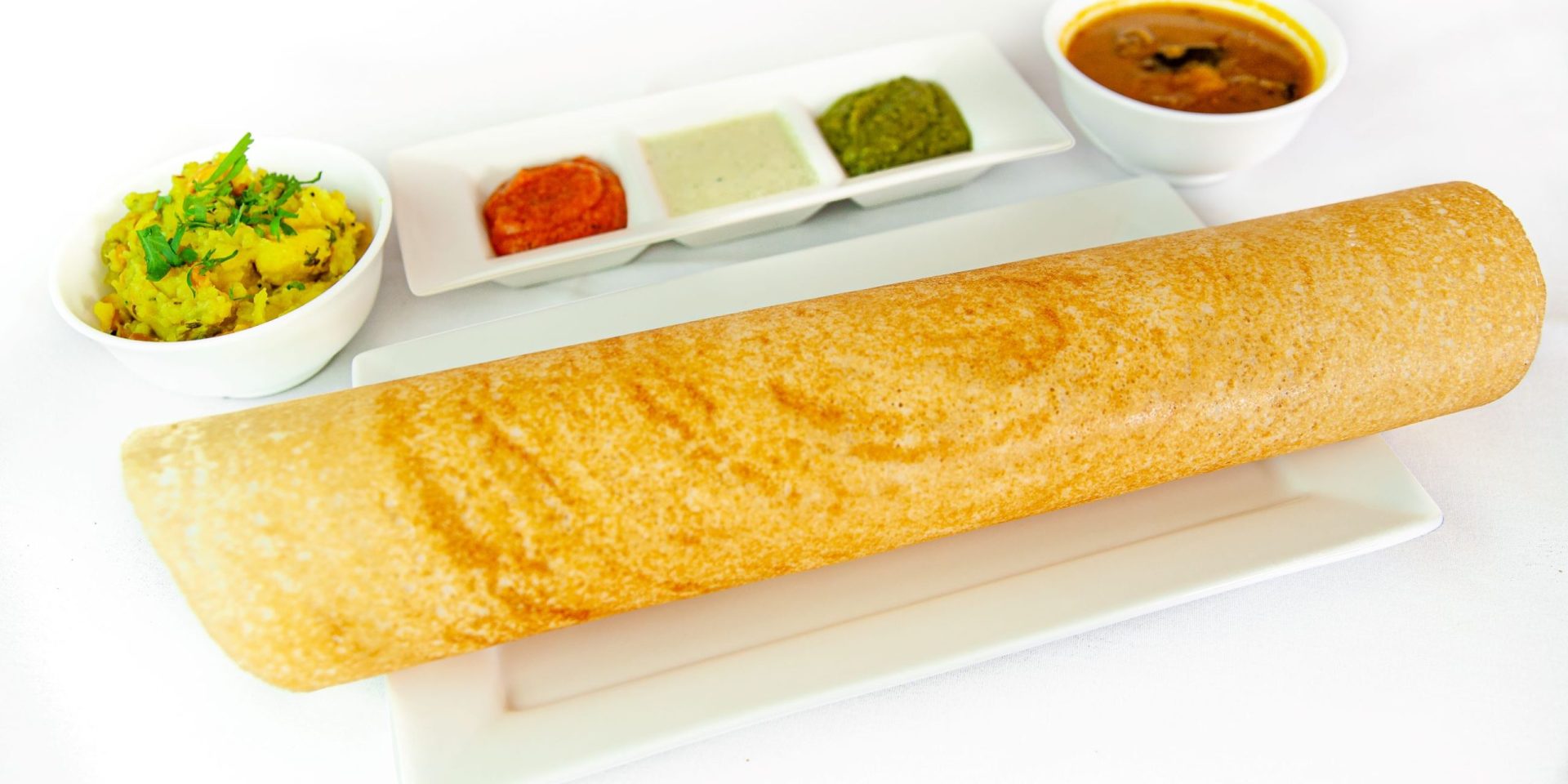
Masala Dosa—a beloved staple originating from the coastal town of Udupi in Karnataka, South India—is one of India’s most iconic culinary exports. Celebrated for its golden, paper-thin, crispy exterior and spiced potato interior, it is served hot alongside steaming lentil stew (sambar) and fresh coconut relishes (chutneys).
1. Culinary Identity: Is Masala Dosa a "Curry"?
While international diners often group Indian food under the broad heading of "curry," Masala Dosa is not a curry itself. Instead, it is a fermented savory crepe stuffed with a spiced potato preparation called Potato Masala (Aloo Bhaji or Aloo Palya).
The dish combines two distinct elements:
The Dosa: A thin, fermented batter crepe made from rice and black gram lentils (urad dal), cooked on a heavy flat griddle until golden and crisp.
The Potato Masala: A fragrant, semi-dry potato filling seasoned with mustard seeds, curry leaves, turmeric, onions, and green chilies.
When wrapped around the warm potato filling and served with bowls of hot sambar (tangy lentil-vegetable stew) and chilled coconut chutney, it forms a complete, well-balanced meal.
2. Cultural Roots and the Udupi Heritage
The origins of Masala Dosa trace back centuries to Tamil Nadu and Karnataka, but the modern crispy, stuffed version was popularized by the vegetarian temple kitchens of Udupi in Karnataka.
Temple Roots: Udupi cooks transformed the soft, thick traditional dosa into a thin, crispy, golden crepe roasted with clarified butter (ghee).
The Invention of the Filling: Legend has it that royal or street cooks created the dry potato masala filling as a clever alternative to onion-heavy gravies during periods when onions were restricted in temple cooking, or simply to make the dish portable and easy to stuff inside flat crepes.
Global Spread: In the mid-20th century, Udupi restaurants (Udipi Hotels) expanded across Mumbai, Delhi, and globally, turning Masala Dosa into an international fast-food phenomenon.
3. The Science of Dosa Batter & Fermentation
The signature texture of a Masala Dosa—crispy on the outside, slightly chewy within, and delicately tangy—is achieved through natural lacto-fermentation.
Batter Composition
Parboiled & Raw Rice: Provides starch for crispness and structural integrity.
Skinned Black Gram (Urad Dal): Rich in mucilaginous proteins that trap air bubbles, giving the batter lightness and lift.
Fenugreek Seeds (Methi): Added in small quantities to aid fermentation, impart a reddish-golden color, and add a subtle caramel aroma.
Chana Dal (Bengal Gram): Often added to boost browning via the Maillard reaction when exposed to the hot griddle.
Fermentation Process
After soaking and grinding into a smooth, airy batter, it ferments naturally for 8 to 12 hours at – . Naturally occurring lactic acid bacteria and yeasts double the batter's volume, producing carbon dioxide (for airiness) and lactic acid (for the characteristic sour tang).
4. Deconstructing the Layers and Flavor Architecture
A complete Masala Dosa platter balances varied textures, temperatures, and spice profiles across its components:
Component
Key Ingredients
Flavor & Texture Profile
Dosa Shell
Fermented rice and urad dal batter, Ghee or Oil
Paper-thin, golden, lace-like, ultra-crisp exterior with a subtle sour tang.
Red Chutney (Mysore Style)
Roasted chana dal, dry red chilies, garlic, tamarind
Smeared on the inside of the crepe; adds fiery heat, garlic pungency, and rich color.
Potato Masala (Filling)
Boiled potatoes, mustard seeds, curry leaves, turmeric, green chilies, onions
Soft, comforting, earthy, yellow, mildly spiced with a sweet onion crunch.
Sambar (Side)
Toor dal (pigeon peas), tamarind, vegetables, sambar spice powder
Hot, liquid, tangy, savory lentil broth for dipping.
Coconut Chutney (Side)
Fresh coconut, green chilies, roasted gram, mustard-curry leaf tempering
Cool, creamy, rich, nutty, tempering the hot spices.
5. Regional Variations Across South India
Different South Indian states have created famous regional takes on the classic Masala Dosa:
Mysore Masala Dosa (Karnataka)
Famous for being thicker and softer on the inside while remaining crisp on the outside. The inner surface is smeared with a fiery red garlic-chili paste (Kempu Chutney) before adding the potato filling, and it is roasted liberally with pure butter or ghee.
Paper Masala Dosa
Extremely thin and stretched out to several feet in length on large commercial griddles. It is paper-crisp and fragile, served rolled into a giant cylinder or cone with the potato masala placed in the center or on the side.
Benne Masala Dosa (Davanagere, Karnataka)
Originated in the town of Davanagere. Made with a thicker, aerated batter and fried in massive amounts of fresh white un-salted butter (benne), resulting in a rich, melt-in-the-mouth crust.
Rava Masala Dosa
Made from an unfermented batter of semolina (rava), rice flour, and all-purpose flour mixed with buttermilk, black pepper, and ginger. Poured onto the griddle to form a delicate, net-like, lacey crepe filled with potato masala.
6. Mastering the Griddle (Tawa) Technique
Cooking a perfect restaurant-quality Masala Dosa requires precise temperature control:
Seasoning the Tawa: A heavy cast-iron or thick flat griddle (tawa) is heated and greased, then splashed with cold water to bring the surface temperature down to an even heat.
Spreading: A ladleful of batter is poured into the center and quickly spread outward in tight, smooth concentric circles using the back of the ladle before the batter sets.
Roasting: Drizzles of oil or ghee are applied around the edges and center. As the water evaporates, the starches brown and crisp up, loosening the edges from the iron.
Stuffing & Folding: The potato masala is placed in the center, and the dosa is folded into a half-moon shape or rolled into a tight cylinder.
7. Nutritional Value and Pairings
Masala Dosa is a wholesome, naturally vegetarian (and easily vegan) meal:
Balanced Meal: Combines complex carbohydrates from rice and potatoes, plant-based protein from lentils (urad and toor dal), and healthy fats from coconut and ghee.
Gut-Friendly: The fermented batter provides natural probiotics that aid digestion.
Classic Beverage Pairing: Universally paired with a frothy glass of South Indian Filter Coffee (Kaapi), brewed using dark-roasted coffee beans and chicory, served in a traditional metal cup and saucer (dabarah).
Grand Cholan restaurant is also an excellent venue for private events, including Christmas parties, corporate gatherings, birthday celebrations, anniversaries, and more. For additional information about our mission, menu, and attentive table-side service, please visit www.grandcholan.com.