

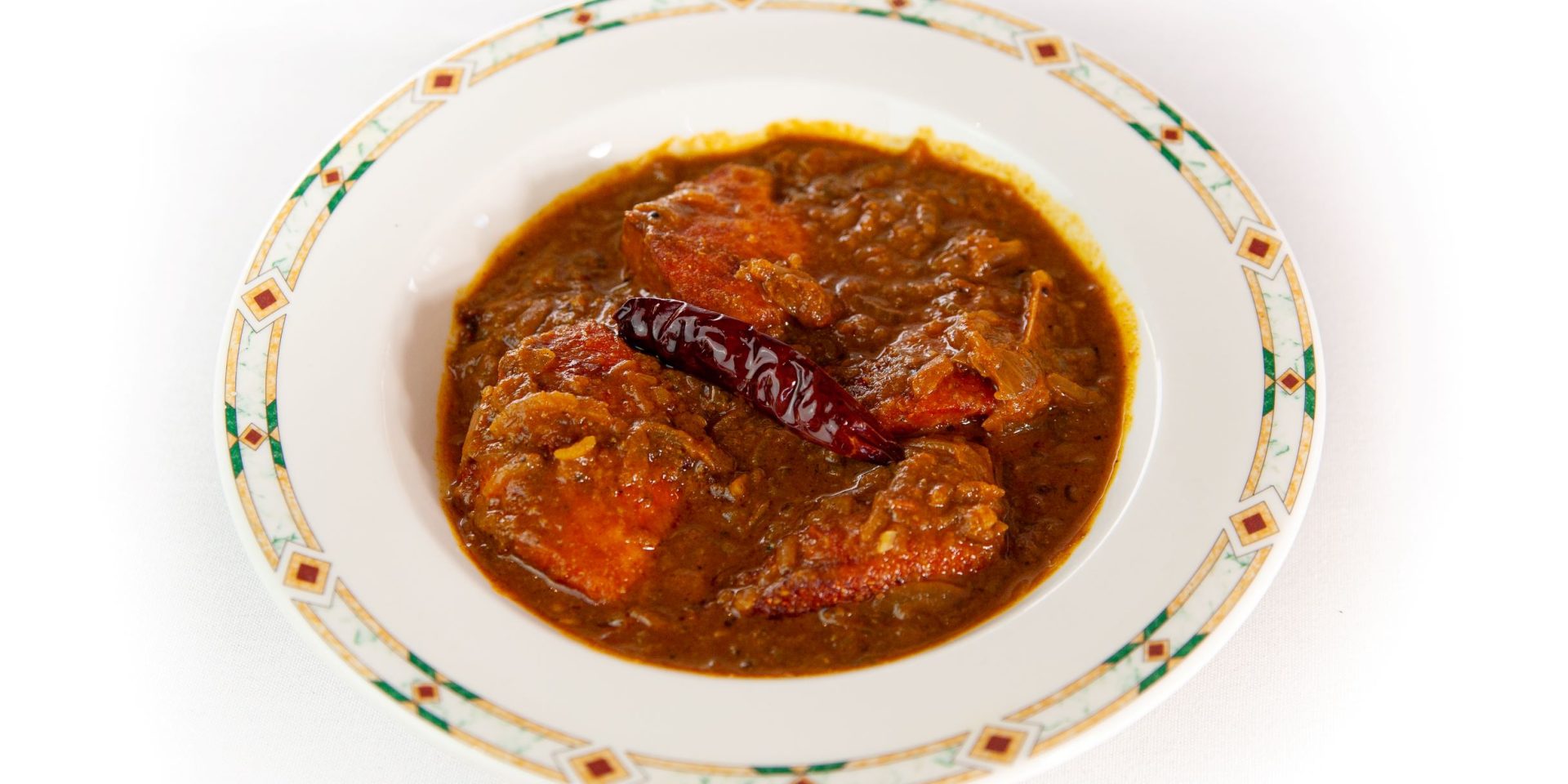
Kerala Fish Curry
Kerala Fish Curry—known locally as Meen Curry—is an iconic staple of South India’s coastal cuisine, embodying the tropical flavours and maritime heritage of God’s Own Country. Characterised by its fiery red hue, tangy undertones, and aromatic coconut temper, this dish transforms fresh seafood into a soul-warming culinary masterpiece.
The Defining Ingredient: Kudampuli
What distinguishes traditional Kerala fish curry from almost any other seafood curry in Asia is the use of Kudampuli (Malabar tamarind or Garcinia cambogia).
Unlike regular tamarind or lemon juice, Kudampuli consists of dried, sun-cured fruit rinds that impart a distinctive smoky, sharp tartness. Before cooking, the black pieces are soaked in warm water and then added directly to the simmering gravy. Beyond giving the curry its signature sour profile, the natural acidity cuts through the oiliness of sea fish such as kingfish, sardine (mathi), or mackerel (ayala), while helping to firm delicate fillets during slow cooking.
Regional Varieties & Style Profiles
While every home across Kerala has its own treasured family recipe, the preparation generally falls into two major regional styles:
Kottayam-Style Red Fish Curry (Meen Vattichathu): Originating in central Kerala, this version is intensely hot and completely coconut-free. A vibrant paste of Kashmiri chilli powder, spicy red chilli powder, coriander, fenugreek, garlic, and ginger forms a deep crimson gravy. It is simmered until reduced (vattichathu) to a thick, concentrated glaze that coats the fish.
Malabar Coconut Fish Curry (Meen Peera / Coconut Curry): Along the northern coast, fresh coconut takes centre stage. Ground coconut paste or thick coconut milk is stirred into the curry base, yielding a silky, golden-orange sauce that mellows the bite of green chillies and tamarind.
Both styles rely heavily on unrefined coconut oil and fresh curry leaves added at the very end to lock in a sweet, nutty aroma.
The Clay Pot Technique (Meen Chatti)
Authentic Kerala fish curry is almost exclusively prepared in an earthenware pot known as a Meen Chatti.
The porous clay cooks heat evenly and retains moisture, allowing the spices to penetrate deep into the fish without breaking the delicate flesh. Crucially, clay pots interact with the acidity of the Kudampuli, rounding out sharp edges into a balanced, mellow tang.
The dish is famous for improving with age. Many home cooks prepare the curry a day in advance, letting the clay pot sit overnight so the fish absorbs the complex sour-and-spicy gravy, resulting in a far richer taste the next afternoon.
Traditional Pairings
Kerala Fish Curry is rarely eaten alone; it forms the centerpiece of coastal meals:
Kappa (Mashed Tapioca): The absolute classic pairing. Boiled tapioca tempered with mustard seeds, coconut, and turmeric absorbs the fiery, sour gravy seamlessly.
Matta Rice: Coarse, boiled Kerala red rice provides a hearty, nutty base for generous spoonfuls of red curry sauce.
Appam & Pathiri: Mild, thin rice crepes or flatbreads temper the sharp spice of the curry for breakfast or dinner.
Grand Cholan restaurant is also an excellent venue for private events, including Christmas parties, corporate gatherings, birthday celebrations, anniversaries, and more. For additional information about our mission, menu, and attentive table-side service, please visit www.grandcholan.com.