

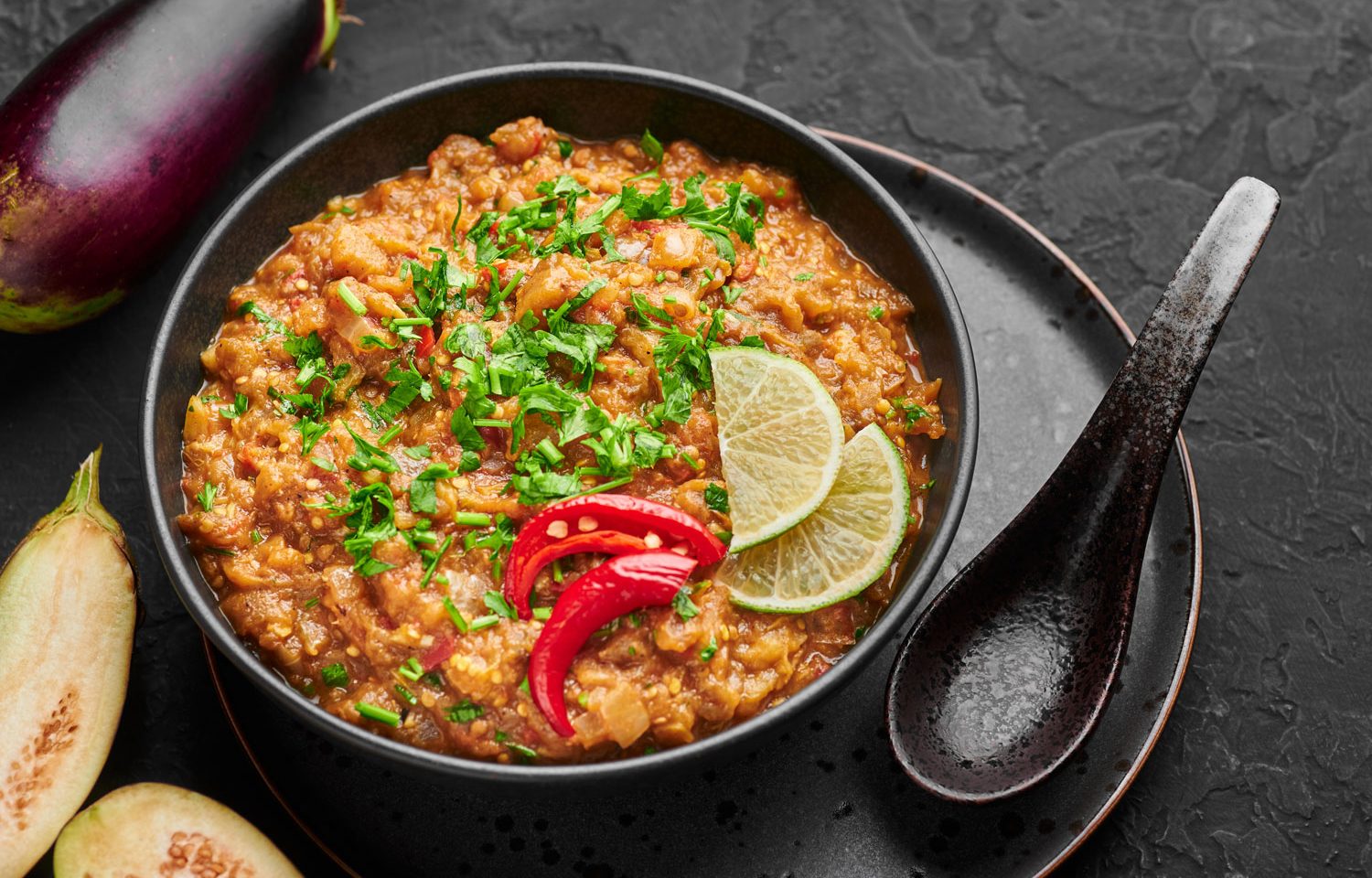
Baingan Bharta
Baingan Bharta—a staple dish originating from the Punjab region of North India—is a rustic, charred aubergine (eggplant) preparation known for its rich, smoky flavor profile. Unlike heavy, gravy-laden North Indian curries like Tikka Masala or Korma, Bharta is a semi-dry dish made by mashing charcoal-roasted aubergines and sautéing them with onions, tomatoes, garlic, ginger, and green chilies.
1. Culinary Origin and the Meaning of "Bharta"
The word Baingan translates to aubergine or eggplant, while Bharta derived from Hindi/Punjabi refers to a mash or pureed mixture. Historically rooted in rural agricultural communities, Baingan Bharta was created as a simple, highly flavorful way to prepare fresh harvest vegetables over open charcoal or cow-dung hearths (chulhas).
The dish embodies the rustic philosophy of North Indian comfort food: minimal spices, reliance on high heat for natural flavor development, and heavy use of fresh aromatics.
2. The Science of Charcoal Roasting & Tandoori Heat
The core flavor identity of authentic Baingan Bharta comes from intense, direct-heat roasting, traditionally achieved inside a cylindrical clay tandoor or directly over live coal flames.
Pyrolysis & Charcoal Smoke: When the whole aubergine skin charcoals over high heat (above 300°C), thermal decomposition (pyrolysis) occurs. The skin turns into delicate black ash, transferring volatile smoky aromatic compounds (syringol and guaiacol) deep into the vegetable flesh.
Steam Tenderization: The high moisture content inside the aubergine turns to steam, cooking the spongy interior flesh until soft, sweet, and silky without boiling or waterlogging the vegetable.
Garlic Infusion Technique: In traditional preparation, deep slits are made in the raw aubergine skin before roasting, and whole peeled garlic cloves are stuffed inside. As the aubergine roasts, the garlic roasts simultaneously in the vegetable's internal steam, losing its harsh pungency and turning sweet, soft, and mellow.
3. Selecting the Right Aubergine
Not all aubergines work for a classic Punjabi Bharta.
Type: Large, round, dark-purple European or globe-style aubergines (often called Bhartay Wala Baingan in Indian markets) are essential. Small, slender, or Japanese varieties contain insufficient pulp and too much skin ratio.
Weight & Density: Cooks select large aubergines that feel surprisingly lightweight for their size. Heavy aubergines contain dense seeds, which impart a bitter taste and grainy texture to the mash. Lightweight aubergines indicate fewer seeds, higher air density, and sweeter tender flesh.
4. Flavor Architecture and Spice Composition
Bharta relies on a delicate balance of sweet, acidic, pungent, and earthy flavors. Unlike standard curries, it avoids heavy cream, nuts, or overpowering whole spice powders (garam masala is used sparingly, if at all).
Component
Ingredients
Culinary Purpose
Primary Base
Charcoal-roasted, skinned, and coarsely hand-mashed aubergine pulp.
Provides the core silky texture and deep smoky baseline.
Aromatic Foundation
Finely diced red onions, minced fresh garlic, ginger, green chilies (Hari Mirch).
Sautéed until translucent to add crunch, sweetness, and sharpness.
Acidic Counterbalance
Chopped fresh tomatoes, optional lemon juice.
Cuts through the smokiness and richness of mustard oil/ghee with sharp acidity.
Cooking Fat
Unrefined Mustard Oil (Sarson ka Tel) or Ghee.
Mustard oil provides a pungent, sharp bite that pairs naturally with smoky roasted aubergine.
Minimal Dry Spices
Cumin seeds (Jeera), Red chili powder, Turmeric, Coriander powder.
Adds subtle warmth without masking the natural roast flavor.
5. Regional Variations Across South Asia
While the Punjabi Tandoori style is the most globally recognized, several distinct regional interpretations exist:
Punjabi / Dhaba Style
Sautéed with generous amounts of mustard oil, onions, tomatoes, and garlic. The aubergine mash is left slightly coarse, maintaining texture rather than turning into a smooth paste.
Baigan Pora (West Bengal)
A minimal, raw-assembled Bengali version where the roasted aubergine pulp is mixed directly with raw mustard oil, raw chopped red onions, green chilies, and salt without secondary cooking in a skillet.
Baingan Bharta with Peas (Matar)
A popular winter variation in Uttar Pradesh and Delhi where tender green peas (matar) are sautéed along with the onion-tomato base, adding a pop of sweetness and vibrant green contrast.
Baingan no Bharto (Gujarat)
Often cooked with spring onions, green garlic, and sesame oil, typically served alongside Bajra no Rotlo (millet flatbread) and jaggery during winter months.
6. How to Achieve Tandoori Flavor at Home
For home cooks without a commercial clay tandoor, chefs use specific techniques to replicate authentic smoke infusion:
Gas Flame Charring: Placing the whole aubergine directly on an open gas burner grate, turning frequently until the skin is entirely charred, black, and flaky.
Dhungar Method (Charcoal Smoke Trap): After cooking the spiced mash on the stove, a small red-hot piece of charcoal is placed in a small metal bowl inside the curry pot. A drop of ghee is poured onto the glowing coal to create dense smoke, and the lid is sealed tightly for 5–10 minutes to trap the smoke into the curry.
7. Traditional Pairings
Because Baingan Bharta has a rich, smoky, and semi-dry structure, it is paired best with warm, whole-grain flatbreads that can scoop up the thick mash:
Tandoori Roti or Naan: The subtle char on tandoor-baked flatbreads complements the smoke of the aubergine.
Phulka / Chapati: Everyday unleavened wheat flatbreads brushed with fresh ghee.
Bajra Rotla: Millet flatbread, especially popular in winter months across Rajasthan and Gujarat.
Plain Basmati Rice & Dal: Often served as a earthy side dish alongside yellow lentil soup (Tadka Dal) and steamed rice.
Baingan Bharta is an Indian dish prepared by grilling and mincing the grilled Eggplant and then further mixing it with tomato, onion, ginger, garlic, cumin, fresh cilantro, coriander leaves, chili pepper and a neutral vegetable oil. The eggplant is Grilled over charcoal or direct fire. Grilling the eggplant infuses the dish with a smoky flavor and its unique aroma. The grilled and mashed eggplant is then mixed with cooked tomato, chopped for better infusion, browned herbs, condiments and spices.
Traditionally, the dish is often served and eaten with flatbread, such as roti and paratha, and rice or a yogurt salad.
Baingan Bharta is part of the popular cuisine in India where it is made in various regional styles, with ingredients varying from one region to another, in accordance with local traditions and customs
Grand Cholan restaurant is also an excellent venue for private events, including Christmas parties, corporate gatherings, birthday celebrations, anniversaries, and more. For additional information about our mission, menu, and attentive table-side service, please visit www.grandcholan.com.