The History of Tamil Royal Cuisine and Kings
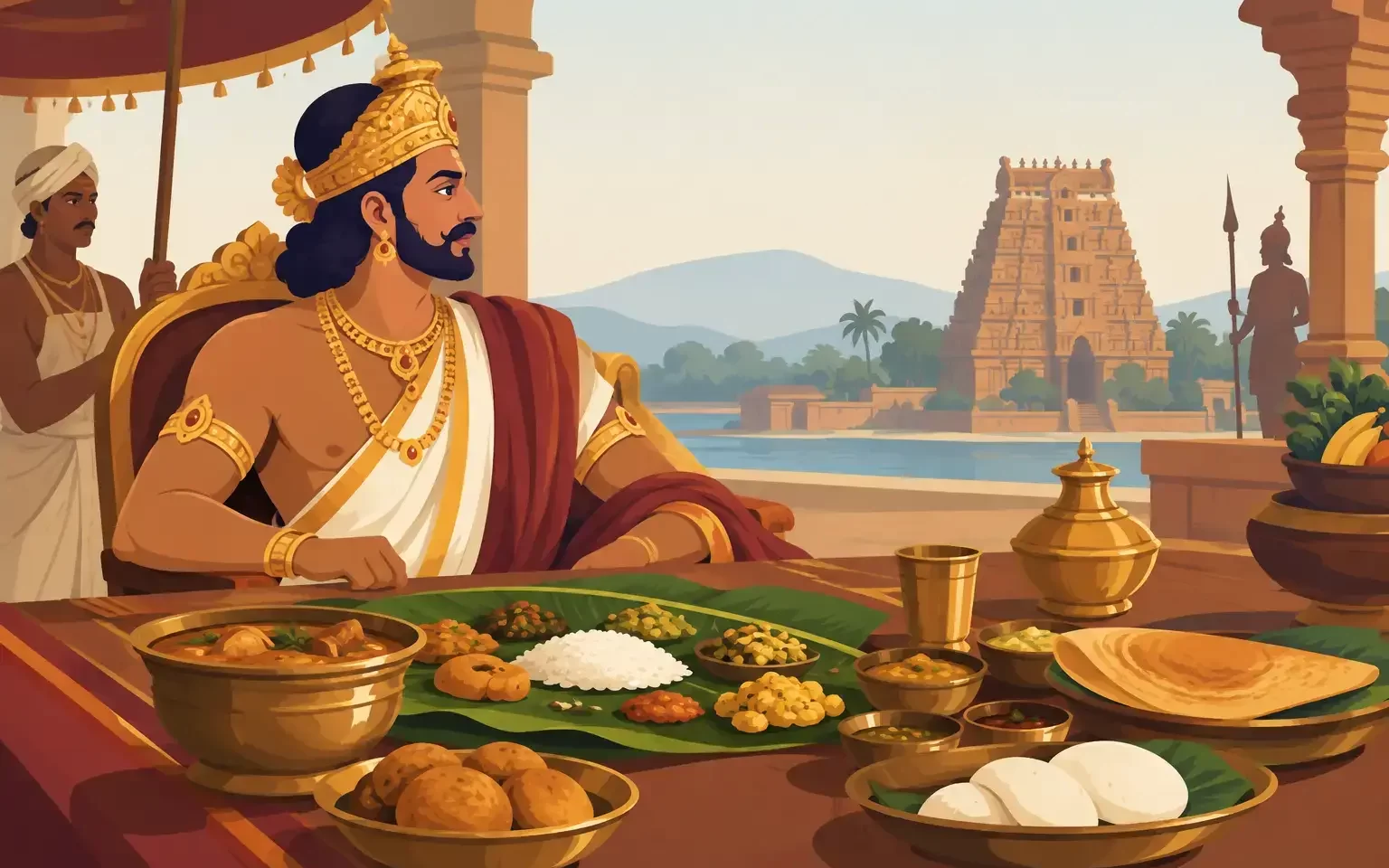
A Tamil royal meal was never simply a display of wealth. It was a statement of hospitality, agricultural confidence, ritual and power: fragrant rice at its heart, seasonal vegetables and pulses around it, and carefully balanced sour, salt, heat and spice in every course. The history of Tamil royal cuisine is therefore not a tale of one lost banquet or a fixed palace menu. It is the story of a food culture shaped by kings, farmers, temple kitchens, coastal trade and the enduring Tamil belief that a generous table honours both guest and home.
The History of Tamil Royal Cuisine Begins with the Land
Tamil country was blessed with distinct food landscapes. The fertile Kaveri delta produced rice in abundance, while drier regions relied more heavily on millets, pulses and hardy grains. Along the coast came fish, salt and trade; inland gardens supplied greens, gourds, plantains and roots. Royal kitchens drew on this abundance, but they did not create it alone. Their splendour depended on the knowledge of cultivators, fishers, merchants, cooks and communities across the kingdom.
Rice became the defining centrepiece of elite Tamil dining, especially in the prosperous river plains ruled by the Cholas. It appeared in many forms: plain steamed rice, soft pongal enriched with ghee, sweet preparations for celebration, and rice dishes tempered with ingredients such as sesame, pepper, ginger or fragrant leaves. A royal meal would have been generous, but its greatness lay as much in balance as in extravagance.
The earliest Tamil literary traditions, often grouped under Sangam literature, speak vividly of landscapes and foods: meat roasted over fire, toddy, honey, rice, seafood and millet. These sources remind us that Tamil food was never one single cuisine. What people ate depended on season, occupation, region and social setting. Courts refined and gathered these traditions rather than replacing them.
Chola Courts and the Art of Abundance
Between the ninth and thirteenth centuries, the Chola dynasty built one of South India’s most influential empires. Their power rested not only on military strength but also on irrigation, temple patronage and thriving maritime connections. The Chola table reflected that wider world.
Courtly food would have featured fine rice, lentils, vegetables, dairy, fruit, jaggery and carefully prepared meats where custom and occasion allowed. Black pepper, native to South India, was especially prized long before chillies became part of Indian cooking. Cumin, coriander, turmeric, ginger, cardamom and mustard added perfume and depth. Tamarind brought its unmistakable tartness, a defining note still found in many beloved Tamil dishes.
It is tempting to imagine every palace meal as rich and heavily spiced. The reality was more nuanced. Tamil cooking values clarity as well as intensity. A delicate rasam-like broth, a simply seasoned vegetable, cooling curd rice or a gently sweet payasam can sit beside a bolder tamarind gravy without being overshadowed. This contrast remains one of the great pleasures of South Indian dining.
Trade Brought New Possibilities
The Cholas maintained maritime links across the Bay of Bengal and the Indian Ocean, connecting Tamil ports with Sri Lanka, Southeast Asia, China and the Arab world. Trade brought wealth, textiles, aromatics and new culinary influences. Yet Tamil cuisine did not lose its identity in the process. It continued to be anchored by rice, lentils, coconut, sesame, tamarind and the precise tempering of spices in hot oil.
That distinction matters when speaking of royal cuisine. A king’s kitchen could access rare ingredients, but prestige also came from presenting familiar local foods at their very best. A dish was judged by the quality of its rice, the freshness of its produce, the fragrance of its ghee and the cook’s control of flavour.
Temple Kitchens Preserved Royal-Scale Hospitality
Much of what can be understood about historic Tamil food comes not from palace recipes but from temple life. Kings and nobles endowed temples with land, grain, cattle, lamps and provisions. Inscriptions record gifts of rice, ghee, curd, sugar, pepper and other ingredients intended for offerings and feeding devotees.
Temple kitchens were places of immense organisation. They prepared food in volume, followed ritual rhythms and developed methods that could feed many people with consistency and care. The idea that a meal should be abundant, orderly and shared across a community sits at the heart of Tamil hospitality. It also helps explain why the banana-leaf feast remains so meaningful.
A traditional celebratory meal is arranged with purpose. Rice arrives as the foundation, followed by combinations of sambar, rasam, kootu, poriyal, pickle, appalam, curd and a sweet dish. The sequence is not merely decorative. Each element offers a different texture, temperature and flavour, allowing the diner to make each mouthful their own.
What Was Not on the Ancient Royal Table
The history of Tamil royal cuisine becomes more interesting when we avoid modern assumptions. Some ingredients now closely associated with Indian food did not belong to the early Chola world. Chillies, tomatoes and potatoes reached India only after European contact with the Americas, becoming widespread much later.
Before chillies, pepper provided much of the heat. Sourness came from tamarind, mango, buttermilk and other local ingredients. Colour and flavour were built with turmeric, pepper, cumin, coriander, ginger, curry leaves, coconut and sesame. This does not make older food less exciting. It reveals a different, often subtler, style of seasoning.
The same care is needed with the word “royal”. Not every dish now served as traditional Tamil food was made in a king’s palace, and no single surviving menu can represent centuries of dynastic life. Royal cuisine is best understood as a culinary heritage shaped by patronage, prosperity and ceremony, then carried forward by households, temples and regional cooks.
From Palace Traditions to Everyday Tamil Favourites
The most remarkable part of Tamil culinary history is its continuity. Foods once linked to harvests, temple offerings and formal hospitality are still cooked at home and served at family gatherings. Idli and dosa demonstrate the brilliance of fermentation. Sambar shows how lentils and vegetables can become deeply satisfying. Rasam offers comfort through its peppery, tangy warmth. Freshly made roti, curries and rice dishes continue the same instinct for generous, balanced eating.
Filter coffee, despite feeling inseparable from South Indian identity today, belongs to a later chapter. Coffee cultivation expanded in southern India during the colonial period, and the metal filter helped create the strong, aromatic brew cherished across Tamil homes and restaurants. It is not a Chola-era drink, but it has become a fitting part of the hospitality tradition: served hot, shared freely and made with care.
For London diners, this history offers a useful way to look beyond the broad label of “Indian food”. Tamil cuisine is not defined by heat alone, nor by a single curry. It is a regional tradition with its own grain culture, sour notes, fermented batters, vegetarian mastery, seafood heritage and ceremonial generosity.
A Royal Heritage for the Modern Table
At Grand Cholan, the inspiration of Tamil kings is not about treating heritage as a museum piece. It is about respecting the ingredients, techniques and sense of welcome that gave this cuisine its lasting character. A crisp dosa, a comforting bowl of sambar or a cup of filter coffee can carry centuries of culinary memory while still feeling exactly right for a weekday lunch, family meal or gathering with colleagues in Canary Wharf.
The finest way to appreciate Tamil royal cuisine is to eat it with attention. Notice the sharp lift of tamarind, the quiet richness of lentils, the fragrance released by mustard seeds and curry leaves, and the way rice brings every flavour together. In those details, a historic royal tradition remains wonderfully alive.