

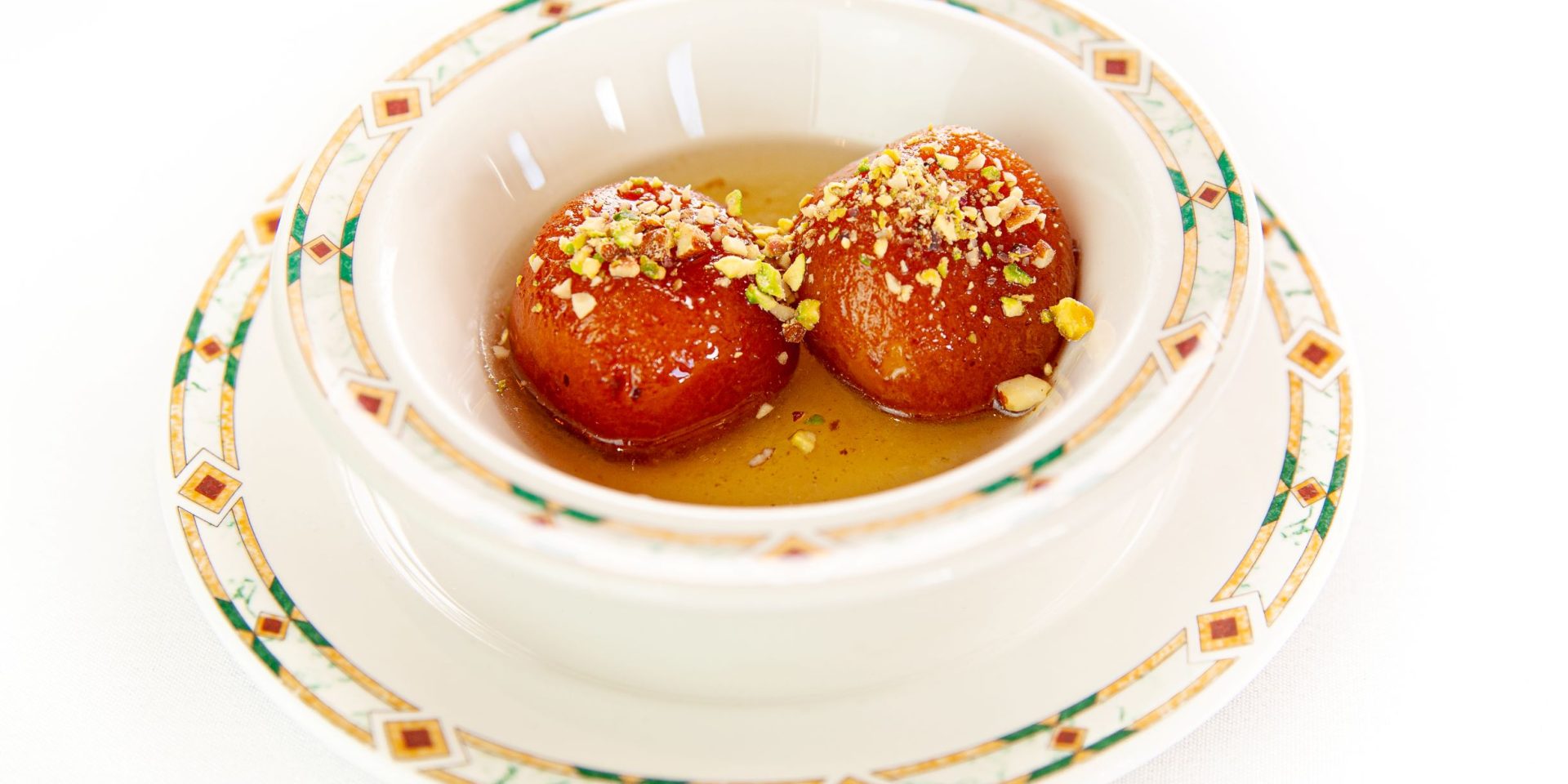
Gulab Jamun , Rasamalai, and Payasam
Gulab Jamun, Rasamalai, and Payasam are three quintessential Indian desserts representing the rich sweet traditions of the subcontinent. None of these dishes are curries. Instead, they belong to the grand tradition of Indian Mithai (confectionery and desserts).
While a savoury Indian curry relies on spice bases, alliums, and acid, Indian desserts are built around dairy reduction, grain starches, natural sweeteners, and aromatic floristry—such as cardamom, saffron, kewra, and rose water. Together, Gulab Jamun, Rasamalai, and Payasam span the geographical and historical breadths of Indian sweet-making, from the North Indian royal courts to the sacred temple kitchens of South India.
Part 1: Gulab Jamun — The Crown Jewel of Indian Confectionery
Gulab Jamun consists of soft, deep-fried dumplings made from reduced solid milk (khoya or mawa), kneaded with a touch of flour, fried slowly until golden or deep brown, and soaked in a warm, cardamom- and rose-infused sugar syrup.
Culinary Origins and Etymology
The name Gulab Jamun reveals its Persian and South Asian roots:
Gulab: Derived from the Persian words Gol (flower) and Aab (water), referring to the rosewater-scented sugar syrup.
Jamun: Refers to Syzygium cumini (the Indian black plum), a local South Asian fruit that resembles the size and oval shape of the sweet dumpling.
Historians trace Gulab Jamun back to a medieval Persian dish called Luqmat al-Qadi (the Judge's Morsel), which consisted of fried dough balls soaked in honey syrup. When Persian trade and Mughal rule expanded across Northern India, royal chefs (khansamas) adapted the recipe by replacing flour-based dough with rich, dairy-based khoya (milk solids condensed over slow heat), giving rise to the modern Gulab Jamun.
The Chemistry of Dairy and Frying
The foundation of a perfect Gulab Jamun is khoya (or mawa). Fresh whole milk is simmered in an open iron wok (kadhai) for hours until nearly all the water content evaporates, leaving behind condensed milk solids rich in milk fats and proteins.
Dough Balance: The khoya is combined with a small ratio of refined flour (mawa to maida ratio is typically 4:1) and a pinch of baking powder. Excess flour makes the dumpling dense and rubbery, while too little flour causes the dumpling to dissolve in the hot frying oil.
Low-Temperature Frying: The dumplings are fried in clarification-refined fat (pure ghee or vegetable oil) over low heat ( – ). Low heat allows the heat to penetrate to the center of the ball slowly, causing the milk solids to expand without burning the sugar on the surface. The deep mahogany color develops via the Maillard reaction between milk proteins and natural sugars.
Syrup Osmosis: Once fried, the hot dumplings are submerged in warm, medium-consistency sugar syrup ( or ~60% sugar concentration). If the syrup is too thick, it cannot penetrate the dense core; if it is too thin, the dumplings turn soggy and collapse.
Part 2: Rasamalai — The Royal Delicacy of Bengal
Rasamalai originates from the Bengal region of East India (celebrated as Rosogolla's refined cousin). It features soft, spongy discs of poached un-aged curd cheese (chhena) soaked in a chilled, saffron- and cardamom-scented condensed milk sauce (rabri).
Etymology and Cultural Roots
The name is a compound of two Hindi/Bengali words:
Rasa / Ros: Meaning "juice," "nectar," or "essence."
Malai: Meaning "cream," referring to the rich milk sauce.
While the basic cottage-cheese ball soaked in syrup (Rosogolla) was perfected in Kolkata by confectioner Nobin Chandra Das in the late 19th century, Rasamalai evolved shortly after when confectioners experimented with soaking squeezed chhena discs in thickened, cardamom-infused saffron milk rather than clear sugar syrup.
The Craft of Working with Chhena
Unlike Western cheeses that use rennet, Indian chhena is produced by curdling hot whole milk with an organic acid like lemon juice, whey, or citric acid.
Kneading: The curds are drained, hung in cheesecloth to remove excess whey, and kneaded extensively by hand. Kneading aligns the milk proteins into an elastic matrix capable of trapping steam without breaking apart during boiling.
Poaching in Light Syrup: The kneaded dough is shaped into flat discs and poached in boiling, light sugar syrup ( ). The moisture inside expands into steam, creating a light, sponge-like structure with microscopic air pockets.
Infusion in Rabri: The boiled discs are gently squeezed to remove the sugar water and placed directly into hot, reduced milk (rabri) infused with saffron strands (kesar), green cardamom, green pistachios, and slivered almonds. As the chhena cools inside the milk, it acts like a sponge, drawing the rich, fragrant saffron milk deep into its center.
Part 3: Payasam — The Ancient Sacred Nectar of South India
Payasam (known as Kheer in North India and Payesh in Bengal) is an ancient milk pudding made by simmering rice, vermicelli, tapioca pearls (sabudana), or lentils in milk, sweetened with jaggery or sugar, and flavored with cardamom, cashews, and raisins fried in ghee.
Historical and Temple Heritage
Payasam is one of the oldest recorded desserts in human history, with literary references dating back over 2,000 years to ancient Sanskrit and Sangam texts.
Etymology: The word Payasam derives from Payas, the Sanskrit word for "milk."
Temple Traditions: Payasam holds a sacred status in South India. It is prepared as Prasadam (sacred offering) in major Hindu temples. The Ambalappuzha Sri Krishna Temple in Kerala is world-famous for its Ambalappuzha Pal Payasam, a sweet milk porridge cooked for hours in massive copper cauldrons (varapu), turning naturally pinkish-cream due to the caramelization of milk sugars.
Feast Staple (Sadhya): In Kerala and Tamil Nadu, no grand festival, wedding, or traditional Sadhya (banana leaf feast) is complete without at least two varieties of Payasam served near the end of the meal.
Key Varieties of Payasam
Unlike Gulab Jamun and Rasamalai, which rely on specific milk solids, Payasam offers wide regional versatility based on the starch and sweetener used:
Paal Payasam (Milk & Rice): The simplest and most revered form. Made by simmering short-grain rice (such as Jeerakasala or Unakkalari) in whole milk and sugar until the milk reduces to half its volume.
Semiya Payasam (Vermicelli): Made by roasting wheat vermicelli (semiya) in pure ghee, then simmering it in milk, sugar, cardamom, and ghee-fried nuts.
Parippu Payasam (Lentil & Jaggery): A classic traditional Kerala variation made by roasting split yellow lentils (moong dal) in ghee, cooking them in coconut milk (instead of dairy milk), and sweetening with dark unrefined cane sugar (jaggery).
Javvarisi / Sabudana Payasam: Made with soaked tapioca pearls cooked in milk, creating a glossy, translucent texture.
4. Comparative Matrix: Dessert Profiles
Feature
Gulab Jamun
Rasamalai
Payasam / Kheer
Primary Region
North, Central, and West India
East India (Bengal)
South India (Tamil Nadu, Kerala, Karnataka)
Primary Ingredient
Khoya (condensed solid milk) + flour
Chhena (fresh curd cheese)
Rice, vermicelli, or lentils + milk/coconut milk
Cooking Technique
Deep frying + syrup soaking
Poaching in syrup + milk soaking
Slow simmering / reduction pudding
Dominant Aromatics
Rose water, green cardamom, saffron
Saffron, green cardamom, pistachios
Cardamom, nutmeg, ghee-fried cashews
Serving Temperature
Warm or room temperature
Chilled
Hot, warm, or chilled
Cultural Context
Weddings, Diwali, festive feasts
Celebrations, Durga Puja, gifting
Temple offerings, Sadhya feasts, everyday comfort
5. Spices and Aromatics in Indian Desserts
Although these desserts are sweet, Indian sweet-makers use specific natural botanicals to build complex flavor top-notes:
Green Cardamom (Elaichi): The quintessential dessert spice. Ground seeds provide a bright, menthol-citrus warmth that cuts through the heaviness of reduced dairy.
Saffron (Kesar): Derived from the dried stigmas of the Crocus sativus flower. It imparts a brilliant yellow-gold hue and a luxurious, earthy, floral aroma to milk bases.
Rose Water & Kewra: Distillations of damask rose petals and pandanus flowers (screwpine), used primarily in Northern and Eastern desserts to add cooling floral top notes.
Nutmeg & Mace (Jaiphal & Javitri): Used sparingly in South Indian Payasam to add a warm, woody depth.
6. Modern Adaptations
In contemporary global gastronomy, these three classic desserts are frequently reimagined by modern chefs:
Gulab Jamun Cheesecake: Crushed biscuits topped with a baked cream-cheese layer embedded with mini hot Gulab Jamuns.
Rasamalai Tres Leches: A Latin-Indian fusion cake soaked in saffron rabri milk instead of traditional evaporated/condensed milk.
Payasam Ice Cream: Artisanal gelato and ice cream infused with toasted vermicelli, cardamom, and salted jaggery.
Grand Cholan restaurant is also an excellent venue for private events, including Christmas parties, corporate gatherings, birthday celebrations, anniversaries, and more. For additional information about our mission, menu, and attentive table-side service, please visit www.grandcholan.com.