

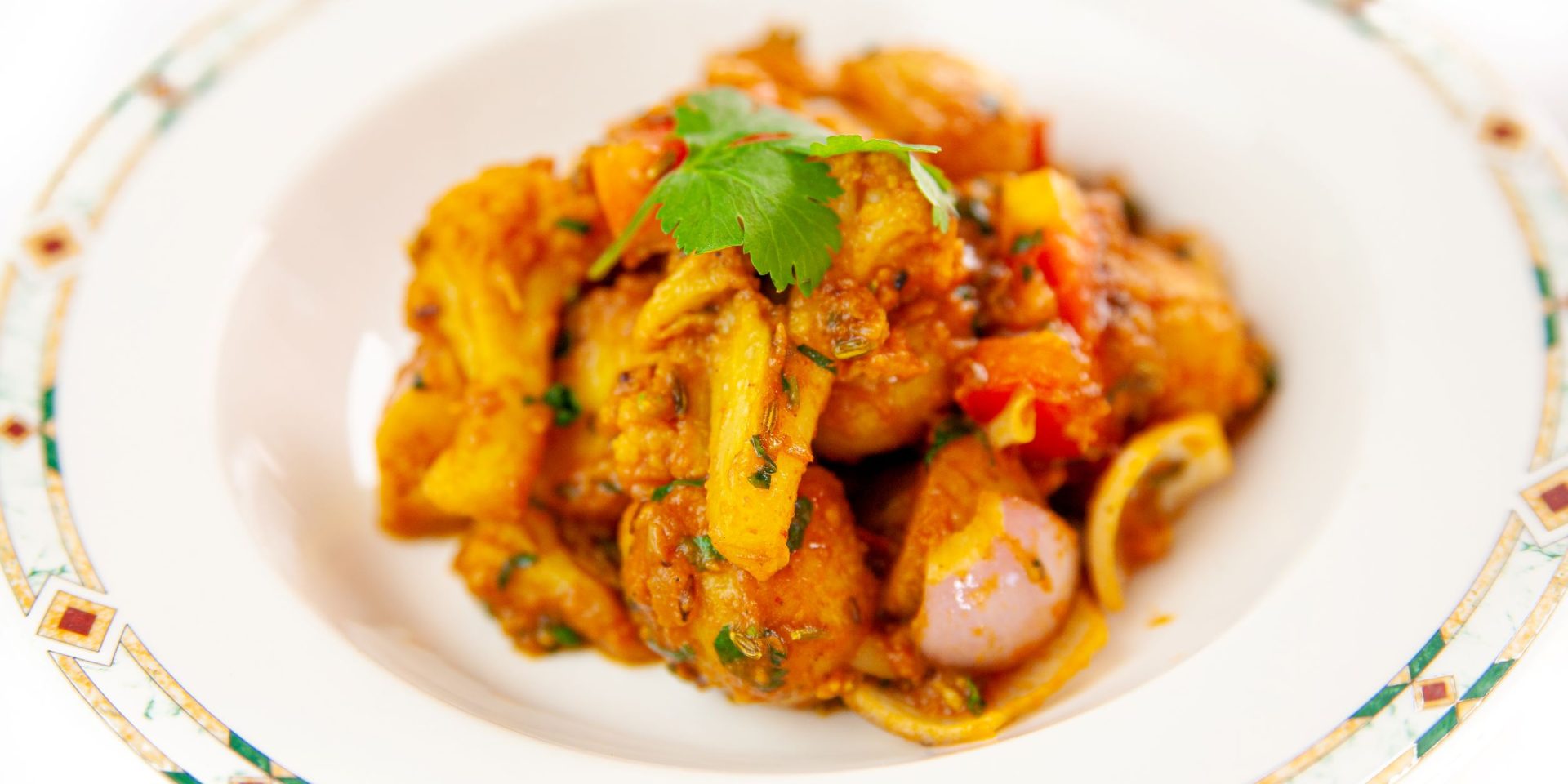
Aloo Gobi
Aloo Gobi—literally translating to "potatoes and cauliflower"—is one of the most iconic, widely loved vegetarian dishes originating from the Punjab region of North India. Celebrated for its golden hue, warm spice profile, and comforting earthy flavors, this vegetable preparation is a mainstay in Indian homes, street-side eateries (dhabas), and international Indian restaurant menus alike.
1. Cultural Roots and Heritage
Rooted in the agricultural heartland of Punjab, Aloo Gobi developed as a practical, highly nourishing humble dish that leveraged seasonal farm produce. Potatoes (aloo) and cauliflower (gobi) thrive during North India's cool winter months, making the dish a seasonal staple served alongside hot whole-wheat flatbreads.
Despite its humble origins, Aloo Gobi has achieved global cultural status—symbolizing home-cooked Indian comfort food. The dish reflects the core philosophy of North Indian household cooking: transforming simple, accessible root and brassica vegetables into a complex, aromatic meal through the intelligent layering of fresh aromatics and dried spices.
2. Dry (Sukhi) vs. Gravy (Rasedar) Variations
While Western diners often associate Indian food with rich, wet sauces, Aloo Gobi is traditionally prepared as a semi-dry or completely dry stir-fry (Sukhi Sabzi). However, two distinct structural forms exist across homes and restaurants:
Dry Style (Sukhi Aloo Gobi)
This is the traditional home-style preparation. The vegetables are gently sautéed or steam-cooked in oil or ghee with aromatics until tender, allowing the concentrated onion-tomato-spice paste (masala) to cling tightly to the florets and potato cubes. The lack of excess water allows the vegetables to brown and roast slightly, creating crisp edges and deep caramelization.
Gravy / Restaurant Style (Rasedar Aloo Gobi)
Often served at weddings, festive buffets, or restaurants, this version features a smooth, medium-thick tomato and onion gravy (gravy base), occasionally enriched with cashew paste or fresh cream. In this style, the cauliflower florets and potato cubes are often deep-fried before being tossed into the sauce to prevent them from disintegrating in the liquid.
3. The Science of Texture: Master Class in Cooking Times
The primary technical challenge in executing a perfect Aloo Gobi lies in the vast difference in cooking times and structural density between potatoes and cauliflower:
Starch vs. Moisture: Dense potatoes require prolonged heat to soften their starch granules, whereas tender cauliflower florets release high amounts of water and quickly turn soggy or mushy if overcooked.
Size Calibration: Chefs and home cooks cut the potatoes into smaller cubes or slender wedges while keeping the cauliflower florets significantly larger. This ensures both components reach peak tenderness simultaneously.
Pre-Browning & Parboiling: In dhaba-style cooking, potatoes are fried or parboiled first, followed by a quick flash-fry of the cauliflower florets. This seals the outer cell walls of the cauliflower, locking in moisture and maintaining structural integrity when tossed with the hot spices.
4. Flavor Architecture and Spice Profile
Aloo Gobi does not rely on heavy cream, nuts, or overwhelming sweet notes. Instead, its flavor profile is warm, savory, slightly tangy, and herbaceous.
Ingredient Category
Key Components
Culinary Function
Aromatic Foundation
Cumin seeds (Jeera), Finely chopped onions, Ginger juliennes, Garlic, Green chilies
Cumin seeds toasted in hot oil form the earthy baseline; fresh ginger provides a sharp, digestive bite that counteracts gas-forming cauliflower.
Ground Spice Matrix
Turmeric (Haldi), Red chili powder, Coriander powder (Dhania), Cumin powder
Turmeric imparts the signature vibrant golden-yellow color; coriander powder acts as a natural thickener and binder for the pan drippings.
Acidic & Herbal Finish
Dried Mango Powder (Amchur), Dried Fenugreek Leaves (Kasuri Methi), Fresh Coriander
Amchur provides a sharp, fruit-like sourness without introducing liquid; Kasuri Methi adds a smoky, bitter-sweet restaurant aroma.
Cooking Medium
Mustard Oil (Sarson ka Tel) or Ghee
Mustard oil gives an authentic rustic, pungent bite popular in Punjabi dhabas, while ghee lends a rich, sweet aroma.
5. Regional and Modern Adaptations
While the Punjabi style is the definitive blueprint, several regional and lifestyle adaptations exist:
Jain Style: Prepared completely without onions, garlic, or root ginger. It relies heavily on cumin, asafoetida (hing), turmeric, coriander powder, and green chilies to construct depth.
Bengali Style (Aloo Phoolgobhir Shorkari): Often includes green peas (matar) and whole spices like cumin and bay leaves, cooked in unrefined mustard oil with a sweeter undertone.
Air-Fried / Sheet-Pan Roasted Aloo Gobi: A popular contemporary Western adaptation where the potatoes and cauliflower are tossed in spices and oil, then oven-roasted on a baking sheet to minimize active stovetop cooking while maintaining crispy edges.
6. Health & Nutritional Benefits
Aloo Gobi is naturally vegan, gluten-free, and nutrient-dense when prepared with moderate oil:
Cruciferous Powerhouse: Cauliflower is rich in vitamin C, vitamin K, fiber, and potent antioxidants like glucosinolates, which support cellular repair and liver detoxification.
Sustained Energy: Potatoes provide complex carbohydrates, potassium, and vitamin B6, making the combination a complete, energy-sustaining vegetarian option.
Digestive Spices: Spices like ginger, cumin, turmeric, and asafoetida (hing) are heavily featured in Ayurveda for their anti-inflammatory properties and ability to ease digestion.
7. Traditional Pairings
Aloo Gobi's dry, spiced structure makes it an ideal pairing with flatbreads and cooling accompaniments:
Roti / Chapati / Paratha: Hot, ghee-brushed whole-wheat flatbreads or flaky layered Ajwain Parathas (carom seed flatbreads) are the classic vehicle for scooping up the spiced vegetables.
Yellow Dal & Rice: Served as a dry side dish (Sabzi) alongside a steaming bowl of Dal Tadka (tempered lentils) and steamed Basmati rice.
Boondi or Cucumber Raita: Salted yogurt mixed with crispy chickpea flour pearls (boondi) or grated cucumber provides a refreshing temperature and spice contrast.
Grand Cholan restaurant is also an excellent venue for private events, including Christmas parties, corporate gatherings, birthday celebrations, anniversaries, and more. For additional information about our mission, menu, and attentive table-side service, please visit www.grandcholan.com.