

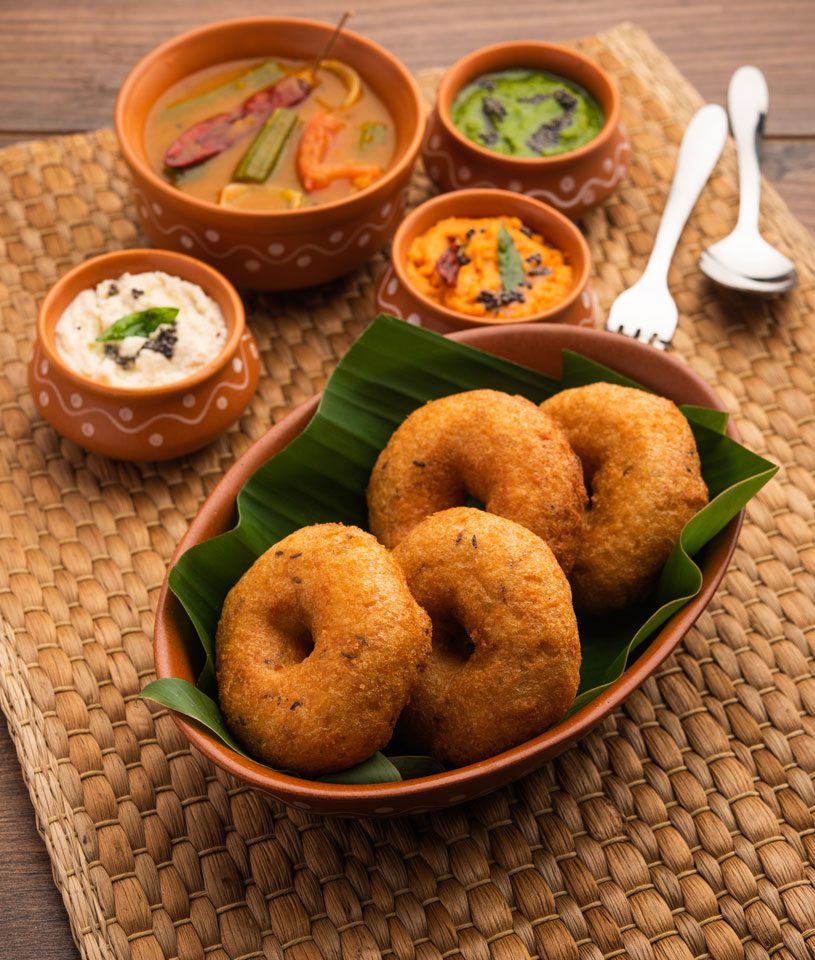
Medu Vadai
Medu Vadai—originating from Tamil Nadu and Karnataka in South India—is one of India's most popular savory snacks and breakfast staples. Celebrated for its unique doughnut-like shape, golden-brown crunchy exterior, and light, fluffy interior, it is served hot alongside steaming lentil stew (sambar) and fresh coconut relishes (chutneys).
1. Culinary Identity: Is Medu Vada a "Curry"?
While often served alongside curries or submerged in sauces, Medu Vada is not a curry itself. It is a savory, deep-fried fritter or doughnut made from a thick, aerated batter of ground black gram lentils (urad dal).
The word Medu translates to "soft" in Kannada and Tamil, referring to the soft, spongy interior of the fritter, while Vada means a savory fritter or patty.
Although served dry as a finger food with dips, Medu Vada regularly transforms into a stew-based dish in preparations like Sambar Vada (where crisp vadas are submerged in hot lentil-vegetable gravy until soft) or Thayir Vada (soaked in chilled, spiced yogurt).
2. Cultural Roots and Heritage
The history of Medu Vada spans several centuries across South India, with early references appearing in ancient Tamil Sangam literature and medieval Kannada texts like the 12th-century encyclopedia Manasollasa compiled by King Someshvara III.
Ancient Beginnings: Originally prepared as a simple, fried lentil patty during festivals, ritual offerings, and temple celebrations, it was valued for using urad dal—a native Indian legume considered sacred and pure in Vedic cooking.
The Modern Shape: The introduction of the iconic hole in the center was a functional innovation by South Indian cooks. Creating a central hole allows hot oil to cook the fritter evenly from both the outside and inside simultaneously, preventing a raw, doughy center.
Tiffin Culture: Today, alongside Idli and Dosa, Medu Vada forms the holy trinity of South Indian tiffin (light meal) culture, served in homes, roadside stalls, and traditional vegetarian Udupi restaurants worldwide.
3. The Science of the Batter and Aeration
Unlike wheat-based doughnuts that rely on yeast or baking powder for lift, the volume and airiness of a Medu Vada depend entirely on natural physical aeration during grinding.
Batter Preparation
Soaking the Dal: Whole or split skinned black gram (urad dal) is soaked in water for 3 to 4 hours. Soaking softens the starch granules and hydrates the proteins (globulins and arabinogalactan).
Grinding with Minimal Water: The hydrated dal is ground into a smooth, thick paste. The golden rule of Medu Vada batter is to add as little water as possible; excess water causes the batter to absorb too much oil during frying and lose its structural shape.
Whipping for Aeration: The ground batter is vigorously whipped by hand or electric whisk in one direction for several minutes. This incorporates air bubbles into the protein matrix, making the batter light and buoyant (a test drop of batter should float on water).
4. Flavor Architecture and Essential Ingredients
The base batter of Medu Vada relies on simple aromatics that provide a balance of warmth, herbal top notes, and crunch:
Ingredient Category
Key Components
Role in the Vada
Primary Base
Skinned Black Gram (Urad Dal)
Provides structural protein, creamy interior texture, and rich nuttiness.
Fresh Aromatics
Finely chopped ginger, green chilies, curry leaves, cilantro
Adds a sharp, pungent bite, herbal freshness, and digestive warmth.
Pungent Finishers
Whole black peppercorns (Kali Mirch), Asafoetida (Hing)
Whole peppercorns provide bursts of heat; hing counteracts gas from legumes.
Textural Enhancers
Fresh coconut bits (Kottu), cumin seeds, finely chopped shallots
Tiny coconut slivers add a sweet crunch; onions add moisture and savory sweetness.
5. Popular Serving Variations
Medu Vada is a versatile canvas served in several distinct ways across South India:
1. Plain Vada with Chutney & Sambar
The crisp, freshly fried vadas are served hot on a banana leaf alongside chilled coconut chutney and a bowl of hot sambar. The diner dips the crunchy vada alternately into the nutty chutney and tangy lentil stew.
2. Sambar Vada (Submerged)
Freshly fried vadas are dropped directly into a deep bowl of boiling-hot, tangy sambar and allowed to soak for 5–10 minutes. The porous lentil interior absorbs the spicy broth like a sponge, softening the crust and turning the vada into a melt-in-the-mouth savory delight, often garnished with ghee and chopped raw onions.
3. Thayir Vada / Dahi Vada (Yogurt Soaked)
Fried vadas are first soaked in warm water to drain excess oil, then submerged in whisked, sweetened, and salted yogurt tempered with mustard seeds, curry leaves, and ginger. It is served chilled as a refreshing, cooling dish.
4. Rasa Vada
Popular in Tamil Nadu and Kerala, where vadas are submerged in hot, peppery, tamarind-and-tomato-infused Rasam broth, creating a light, spicy, digestive soup.
6. Mastering the Frying Technique
Achieving a restaurant-quality Medu Vada requires control over shaping and oil temperature:
Shaping the Hole: The cook wets their hands with cold water, scoops a small ball of thick batter, flattens it on their palm or a banana leaf, pokes a hole in the center with their thumb, and gently slides it into hot oil.
Oil Temperature Control: The oil must be kept at a steady medium-high heat ( – ). If the oil is too hot, the exterior darkens before the inside cooks; if too low, the vada absorbs excess oil and becomes greasy.
Double Frying (Optional): Many professional kitchens flash-fry the vadas halfway, drain them, and give them a second quick fry right before serving to achieve a crispier crust.
7. Nutritional Value and Pairings
Medu Vada is a protein-dense vegetarian option:
High Plant Protein: Black gram lentils are rich in plant-based protein, dietary fiber, iron, and potassium.
Balanced Meal: When paired with Sambar (made from pigeon peas and vegetables) and Coconut Chutney, it offers a complete amino acid profile alongside healthy fats.
Classic Beverage Pairing: Universally enjoyed alongside a steaming, frothy cup of South Indian Filter Coffee (Kaapi), creating the quintessential South Indian morning breakfast experience.
Grand Cholan restaurant is also an excellent venue for private events, including Christmas parties, corporate gatherings, birthday celebrations, anniversaries, and more. For additional information about our mission, menu, and attentive table-side service, please visit www.grandcholan.com.