

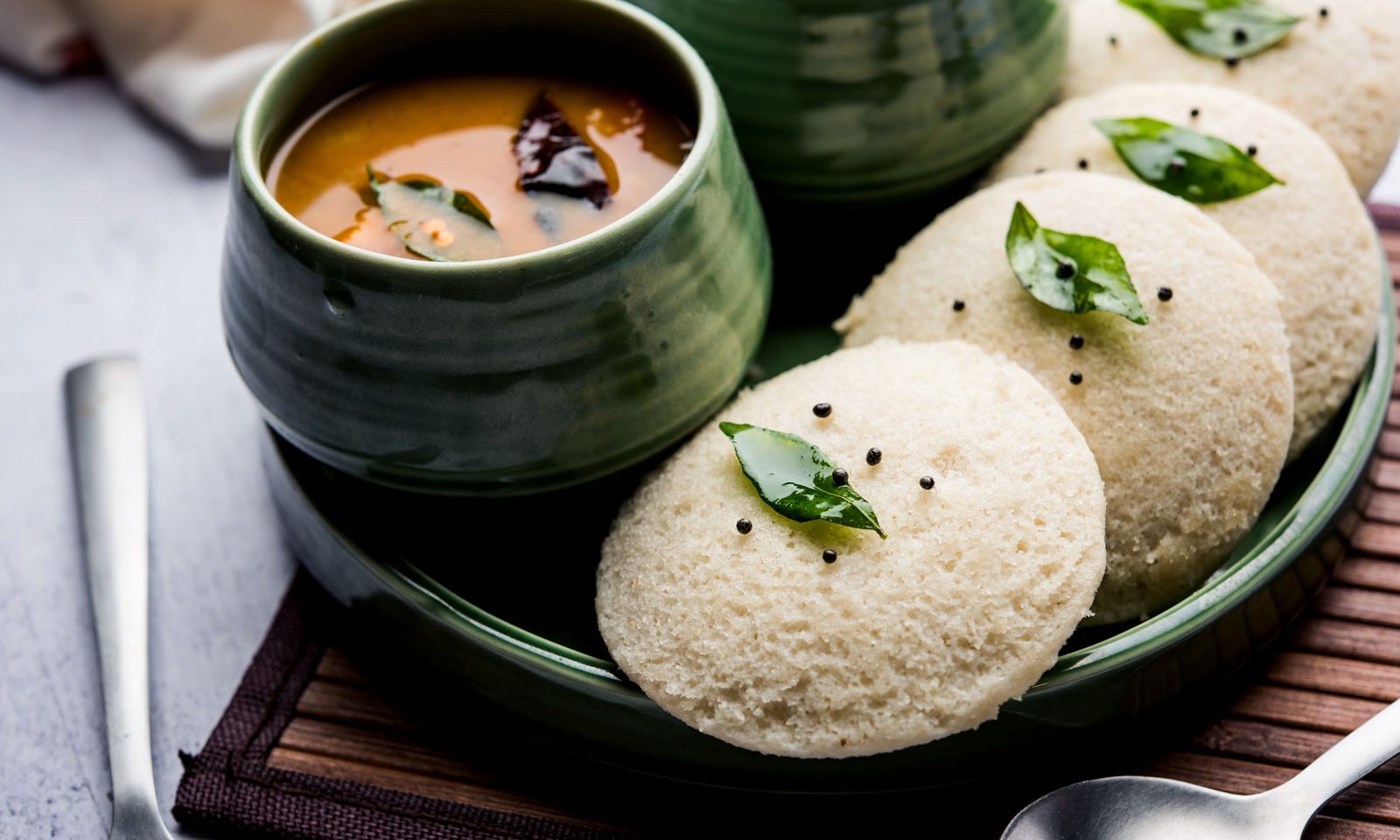
Idli , Sambar Chutney
Idli, Sambar, and Chutney form the quintessential breakfast platter (tiffin) across South India. Celebrated for its nutritional balance, lightness, and complex flavor interplay, this trio is not a single dish but a carefully orchestrated meal.
The soft, neutral, steamed rice cakes (idli) act as the structural base, absorbing the hot, tangy, lentil-and-vegetable stew (sambar) while pairing with the cooling, nutty richness of fresh coconut or tomato relish (chutney).
1. Culinary Heritage and Cultural Importance
Idli-Sambar is an ancient culinary pairing with deep roots in South Indian domestic life and street food culture.
The Evolution of Idli: While early versions of steamed bean cakes existed in ancient India, the modern, fluffy, fermented rice-and-urad-dal idli evolved around the 10th to 12th century. The introduction of steaming molds and lacto-fermentation techniques yielded a cloud-like bread that is soft, easy to digest, and naturally oil-free.
The Origin of Sambar: According to popular culinary folklore from Tamil Nadu, sambar originated in the royal kitchens of the Maratha rulers of Thanjavur when a royal cook substituted tamarind and pigeon peas (toor dal) into a traditional lentil dish, creating a signature tangy stew named after King Sambhaji.
The Tiffin Tradition: Served in homes, roadside stalls, and traditional vegetarian restaurants (Udupi outlets) across Tamil Nadu, Kerala, Karnataka, Andhra Pradesh, and Telangana, Idli-Sambar is considered the gold standard of healthy Indian breakfasts.
2. Deconstructing the Trio: Science and Preparation
The success of this dish relies on three distinct culinary preparations coming together at the dinner table:
1. The Idli (Steamed Fermented Cake)
Idlis are made from a fermented batter of soaked parboiled rice and skinned black gram lentils (urad dal).
The Fermentation Science: Soaked rice and dal are ground into a smooth batter and left to ferment naturally overnight at warm temperatures ( – ). Wild lactic acid bacteria and yeasts naturally present on the grains break down complex starches, producing carbon dioxide gas (which expands the batter) and lactic acid (which gives the idli its subtle sour tang).
Steaming: The airy batter is poured into specialized concave metal molds and steamed for 10–12 minutes. Because no oil or dry roasting is involved, the final idli remains soft, pillowy, and highly porous.
2. The Sambar (Tangy Lentil-Vegetable Stew)
Sambar is a soup-like curry made from split yellow pigeon peas (toor dal), cooked vegetables, tamarind juice, and a complex roasted spice blend (Sambar Masala).
The Lentil Base: Toor dal is pressure-cooked until completely dissolved, providing a velvety, protein-rich foundation.
Vegetables: Traditional additions include drumsticks (moringa), pearl onions (shallots), yellow pumpkin, okra, eggplant, or radishes.
Tamarind & Spice Infusion: Tamarind extract gives the broth its signature sharp acidity, balanced by the Sambar Podi—a ground powder of dry-roasted coriander seeds, cumin, fenugreek, dry red chilies, black pepper, and chana dal.
3. The Chutney (Fresh Relish)
Chutney provides a cool, creamy, or spicy contrast to the hot sambar and steamed idli.
Coconut Chutney (Thengai Chutney): Freshly grated coconut blended with roasted gram (chana dal), green chilies, ginger, and a pinch of salt.
The Tempering (Tadka or Thalippu): Mustard seeds, dry red chilies, split urad dal, and fresh curry leaves are sizzled in hot oil or ghee and poured over the fresh chutney to release fat-soluble aromatic oils.
3. Flavor Architecture and Texture Mapping
The dining experience relies on combining contrasting temperatures, textures, and flavor profiles in every bite:
Component
Key Ingredients
Primary Flavor & Texture Profile
Idli
Parboiled rice, Urad dal, Fenugreek seeds
Neutral, soft, sponge-like, mildly tangy, zero oil.
Sambar
Toor dal, Tamarind, Shallots, Moringa, Sambar spice powder
Hot, liquid, tangy, earthy, complex warmth, savory.
Coconut Chutney
Fresh coconut, Roasted chana dal, Green chilies, Ginger
Chilled/room temperature, creamy, rich, nutty, mild heat.
Tempering (Tadka)
Mustard seeds, Curry leaves, Asafoetida (hing), Ghee/Oil
Crunchy, nutty, sulfurous, herbal top notes.
4. Serving Styles: Dip vs. Separate Plates
Across South India, Idli Sambar is served in two popular styles:
Plate Style (Dry & Dipped): Steamed idlis are placed dry on a traditional banana leaf or stainless steel plate with separate bowls or dollops of sambar and coconut chutney. The diner tears off a piece of idli and dips it alternately into the chutney and sambar.
Sambar Idli (Submerged / Ghee Sambar Idli): Two or three idlis are placed inside a deep bowl and completely submerged in a generous ladle of boiling-hot sambar, drizzled with a spoonful of melted ghee, and topped with fresh coriander. The porous idlis soak up the broth like a sponge, transforming into a savory, melt-in-the-mouth comfort food.
5. Regional Variations
While the basic trio remains consistent, regional preferences alter the flavor dynamics:
Tamil Nadu Style: Emphasizes small shallots (sambar onions), a robust coriander-heavy spice powder, and thick white coconut chutney.
Karnataka / Udupi Style: Features a distinctly sweeter sambar due to the addition of jaggery (unrefined cane sugar) alongside tamarind and fresh grated coconut added directly into the lentil stew.
Andhra & Telangana Style: Noted for much higher spice levels, using fiery Guntur red chilies in both the sambar base and tomato-flaxseed chutneys.
6. Nutritional & Digestive Benefits
Nutritionists and health experts frequently cite Idli-Sambar as one of the world's most balanced natural meals:
Complete Protein Profile: Rice is low in the amino acid lysine but rich in methionine, whereas lentils (urad and toor dal) are rich in lysine but low in methionine. Combining rice and lentils creates a complete protein profile comparable to animal protein.
Probiotic Fermentation: Natural lacto-fermentation boosts gut health, improves nutrient bioavailability, and increases B-vitamin synthesis.
Low Fat & Easy Digestion: Steam-cooked without heavy fats, idlis are easily broken down by the digestive system, making them an ideal meal for people of all ages.
7. Classic Accompaniments
While Idli, Sambar, and Coconut Chutney form a complete meal, traditional South Indian tiffin spreads often expand to include:
Medu Vada: Golden, crispy, savory lentil donuts fried to perfection, often dropped right into the same sambar bowl alongside the idli for texture contrast.
Tomato or Mint Chutneys: Spicy red tomato-garlic or green mint-coriander relishes served as extra dips on the platter.
Filter Coffee (Kapi): A hot, frothy cup of chicory-infused South Indian filter coffee brewed in a brass metal vessel—the traditional finish to an authentic breakfast.
Grand Cholan restaurant is also an excellent venue for private events, including Christmas parties, corporate gatherings, birthday celebrations, anniversaries, and more. For additional information about our mission, menu, and attentive table-side service, please visit www.grandcholan.com.