
Bombay Masala Pav
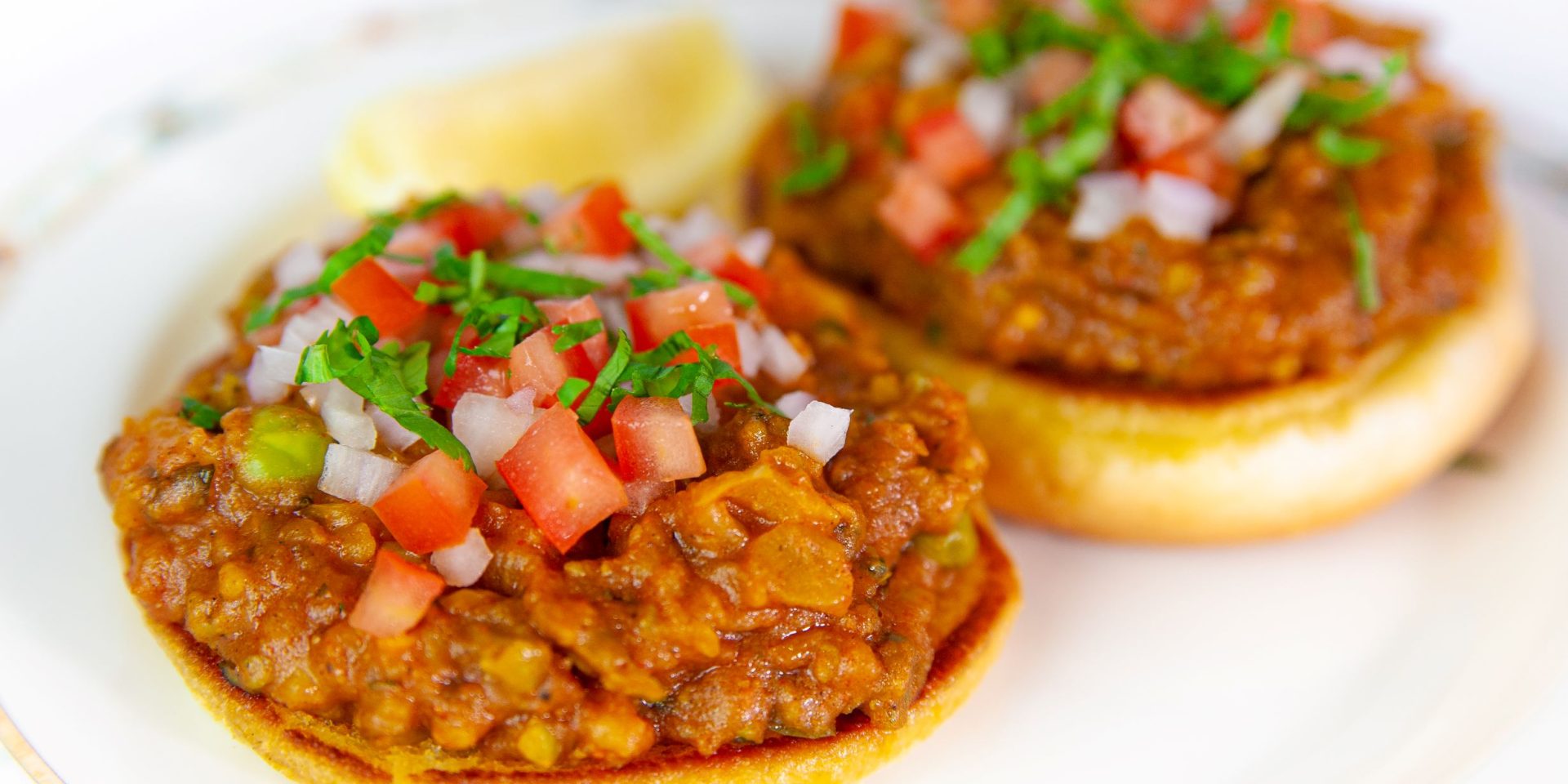
Bombay Masala Pav—a fast-food fixture born on the bustling streets of Mumbai—is a fiery, buttery, and tangy snack. While frequently categorized under the broad umbrella of Indian street food, it originates from Western India (specifically the state of Maharashtra) rather than North India. It consists of soft, pillowy bread rolls (pav) slathered, stuffed, and toasted on a flat griddle (tawa) with a thick, spicy tomato-onion-capsicum gravy (masala).
1. Culinary Heritage: Is Masala Pav a Curry?
Strictly speaking, Masala Pav is not a traditional bowl-and-spoon curry, but rather an ingenious fusion of a chunky, curry-like vegetable masala and Portuguese-influenced soft bread.
The dish was created by Mumbai’s street vendors (pav bhaji walas) as an offshoot of the famous Pav Bhaji. Vendors would take the leftover spicy vegetable curry base from the corner of their massive iron tawas, melt generous slabs of salted butter into it, and toast sliced bread buns right inside the sizzling paste. Over time, Masala Pav evolved into a standalone street-food specialty, featuring a chunkier, quicker-cooking tomato-onion-capsicum base tailored specifically to coat bread rather than serve as a dip.
2. The Cultural Significance of "Pav" in Mumbai
To understand Masala Pav, one must understand the role of bread in Western India:
The Portuguese Connection: The word pav originates from the Portuguese word pão, meaning bread. Portuguese colonizers introduced yeast-leavened bread rolls to Goa and Mumbai in the 18th century.
The Working-Class Fast Food: Unlike North India, where flatbreads like roti, naan, and paratha dominate, Mumbai adopted soft white rolls as cheap, portable fuel for mill workers and commuters.
The Tawa Culture: Street vendors use large, flat, slightly concave iron griddles (tawas) heated over intense gas burners. Cooking the bread and gravy together on the same iron surface allows the bread to absorb the caramelized, smoky flavors of the cast iron and melted butter.
3. Structural Variations of Masala Pav
Street vendors in Mumbai typically prepare Masala Pav in one of two distinct styles:
Open-Face / Stuffed Masala Pav
The pav is sliced horizontally, leaving one edge attached like a hinge. A thick layer of freshly prepared onion-tomato-capsicum gravy is stuffed inside the bun, while more gravy is smeared liberally over the outer crust. The entire sandwich is then toasted on the buttered griddle until hot, soft, and completely coated in spice.
Cheese Masala Pav
A ultra-popular modern variation served at street stalls across Chowpatty Beach and Juhu. Copious amounts of processed Amul cheddar cheese are grated directly over the hot, spiced bread, melting into the tomato base and cutting through the sharp red chili heat.
4. Flavor Architecture and Ingredients
The magic of Bombay Masala Pav relies on high heat, fast assembly, and a balance of rich fats, sharp acids, and pungent aromatics.
Ingredient Category Key Components Role in the Dish The Fat Base Amul Butter (salted yellow butter) Essential for authentic street flavor. Vendors use butter liberally to sear aromatics and toast the bread. Crunchy Veggie Base Red onions, fresh tomatoes, green bell pepper (capsicum) Unlike smooth Pav Bhaji purees, the vegetables in Masala Pav are finely diced and flash-cooked to retain a light crunch. Aromatic Core Ginger-garlic paste, fresh green chilies, coriander leaves Provides sharp heat, pungency, and fresh herbal top notes. Spice Matrix Pav Bhaji Masala, Kashmiri red chili powder, Turmeric, Cumin seeds Pav Bhaji Masala (a blend containing coriander, cumin, dried mango powder, fennel, cinnamon, and star anise) provides the signature street flavor. Acidity & Finishing Freshly squeezed lime/lemon juice, raw diced onions Squeezed over the hot griddle right before serving to cut through the heavy butter. 5. The Street Cooking Technique: Step-by-Step
Watching a Mumbai street vendor prepare Masala Pav is a visual and auditory performance:
Sizzling the Base: A large knob of yellow butter is tossed onto the hot iron tawa, followed by cumin seeds and finely diced onions. The onions are cooked at high heat until translucent.
Flash-Sautéing the Veggies: Ginger-garlic paste, diced green capsicum, and fresh tomatoes are added. The vendor uses a flat metal spatula (pata) to rapidly chop and press the mixture against the hot griddle surface.
Blooming the Spices: Kashmiri red chili powder (for a brilliant ruby-red color without excessive burn) and Pav Bhaji Masala are sprinkled in, followed by a splash of water to create a glossy, thick paste.
Coating the Pav: The bread roll is split open and laid face-down directly onto the bubbling spice mixture. The vendor uses the spatula to smear the hot masala both inside and all over the top of the bread.
Garnish & Serve: Squeezed with fresh lime juice, topped with raw diced red onions, cilantro, and another pat of butter, it is served piping hot on paper plates.
6. Traditional Accompaniments
Because Masala Pav is designed as an all-in-one, handheld or fork-and-knife street snack, it does not require elaborate side dishes. However, it is almost universally paired with classic Mumbai street beverages:
Cutting Chai: A small, strong glass of spiced, boiled milk tea infused with cardamom and ginger—the ultimate pairing to balance the buttery spicy bread.
Kokum Sharbat / Sol Kadhi: A tart, refreshing drink made from dried mangosteen (kokum) fruit, served to cool the palate after eating hot spices.
Raw Onion & Lemon Wedges: Extra raw onions and lime slices served on the side for custom assembly.
Grand Cholan restaurant is also an excellent venue for private events, including Christmas parties, corporate gatherings, birthday celebrations, anniversaries, and more. For additional information about our mission, menu, and attentive table-side service, please visit www.grandcholan.com.