

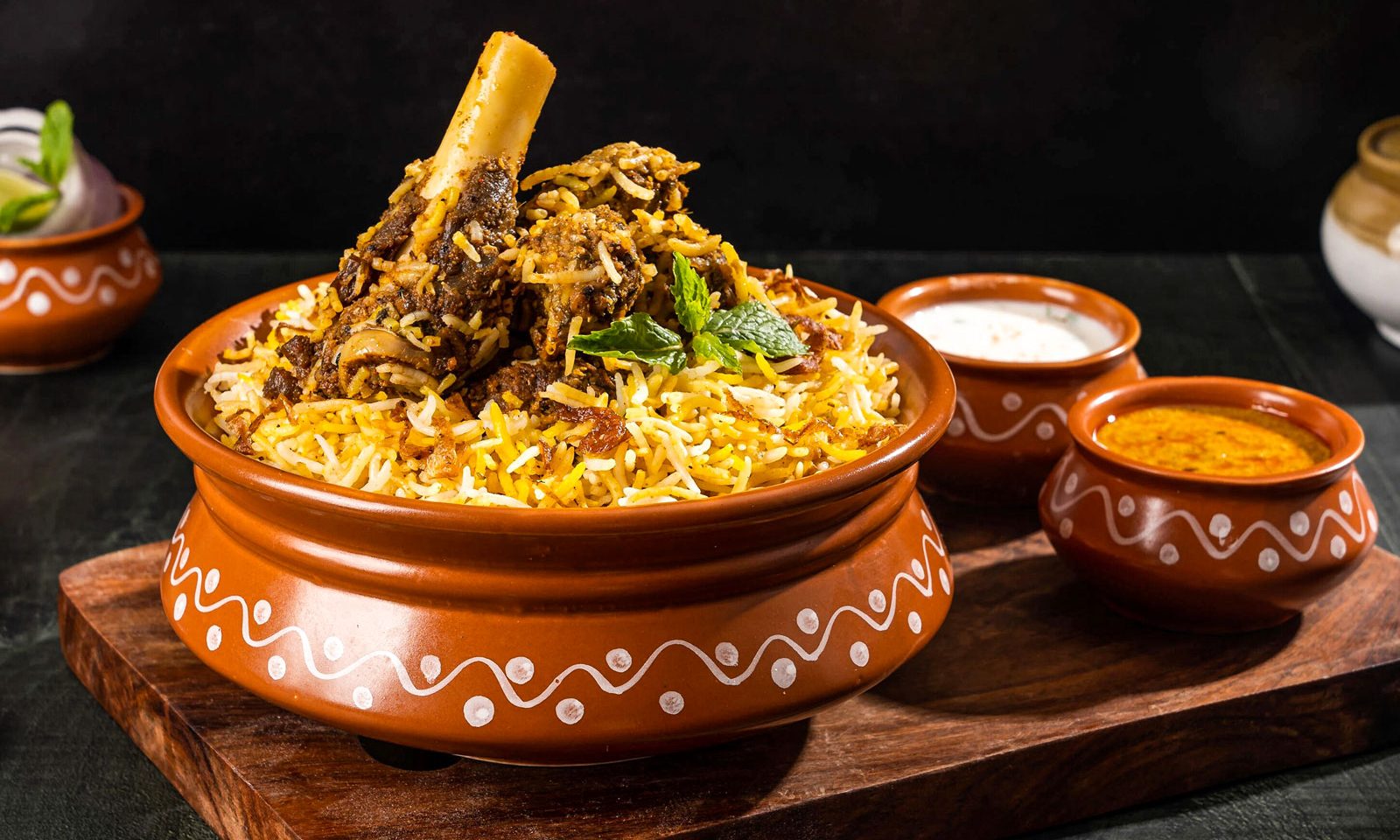
Biryani
Biryani is widely considered the crown jewel of South Asian culinary heritage. Originating from the Persian word birian (meaning "fried before cooking"), this revered dish evolved in the royal kitchens of the Mughal Empire and the Nizams of Hyderabad. At its core, biryani is a harmonious marriage of long-grain basmati rice, warm whole spices, ghee, caramelized onions (birista), fresh herbs, and a primary protein or vegetable base.
While there are dozens of regional styles across the subcontinent—from the fragrant Lucknowi pukki biryani to the tangy Kolkata version with boiled potatoes—the three most celebrated expressions remain Chicken Biryani, Lamb Biryani, and Vegetable Biryani.
1. Chicken Biryani: The Crowd-Pleasing Favorite
Chicken Biryani is arguably the most popular and universally accessible variation. Because chicken is relatively quick to cook, it accommodates both major assembly styles: Kacchi (where raw marinated meat is layered directly beneath parboiled rice) and Pukki (where the chicken gravy is fully cooked before layering).
Marinade & Culinary Dynamics
To prevent chicken from drying out during the high-heat cooking process, bone-in cuts—such as thighs and drumsticks—are essential. The meat is tenderized in a rich marinade of thick yogurt, ginger-garlic paste, green chilies, red chili powder, turmeric, mint, and cilantro.
During the dum process (slow cooking in a sealed pot), the chicken releases juices that create a savory base gravy (yakhni). The steam carrying these aromatic juices travels upward through the parboiled basmati grains, infusing every grain of rice with a delicate poultry richness and vibrant saffron-yellow hue.
2. Lamb (Mutton) Biryani: The Royal Feast
Lamb (or mutton) biryani represents the pinnacle of celebratory feasting. The higher fat content, marrow, and rich collagen of lamb provide a far deeper, more robust flavor than poultry, resulting in a heavier, more opulent dish historically favored for weddings and royal banquets.
The Power of Slow Dum Cooking
Because bone-in lamb requires significantly more time to soften, master chefs (khansamas) often utilize raw-meat kacchi cooking techniques with natural meat tenderizers like raw papaya paste or extended yogurt marination.
The Seal: The pot (handi) is sealed with a rim of dough (atta) to trap every drop of moisture and essential oil inside.
The Meltdown: As heat renders the lamb fat and marrow, the collagen dissolves into gelatin, creating a velvety gravy that coats the rice grains.
The Flavor: Whole spices like black cardamom, star anise, mace, nutmeg, and shahi jeera (caraway) stand up to the strong gaminess of the meat, yielding an intensely aromatic, savory, and multi-layered profile.
3. Vegetable Biryani: A Vibrant Tapestry of Produce
While purists occasionally debate the classification of Vegetable Biryani (sometimes distinguishing it from Tehari), a true Veg Biryani is crafted using the exact same delicate layering and dum cooking techniques as its meat-based counterparts.
Spice Balance & Texture Play
Unlike meat, which releases copious fat and deep umami during slow cooking, vegetables require careful handling so they do not turn mushy under steam pressure. Firm, hearty produce like cauliflower florets, carrots, green peas, green beans, and baby potatoes are tossed in a spiced yogurt base alongside fried onions and whole spices.
Paneer & Nuts: Cubes of paneer (Indian cottage cheese), fried cashews, and raisins are frequently introduced to add protein richness, creaminess, and sweet textural contrast.
Herb & Spice Infusion: Because vegetables lack heavy natural fats, high-quality ghee, saffron-infused warm milk, kewra water (pandanus flower essence), and fresh mint play a crucial role in creating the signature royal aroma.
Grand Cholan restaurant is also an excellent venue for private events, including Christmas parties, corporate gatherings, birthday celebrations, anniversaries, and more. For additional information about our mission, menu, and attentive table-side service, please visit www.grandcholan.com.