

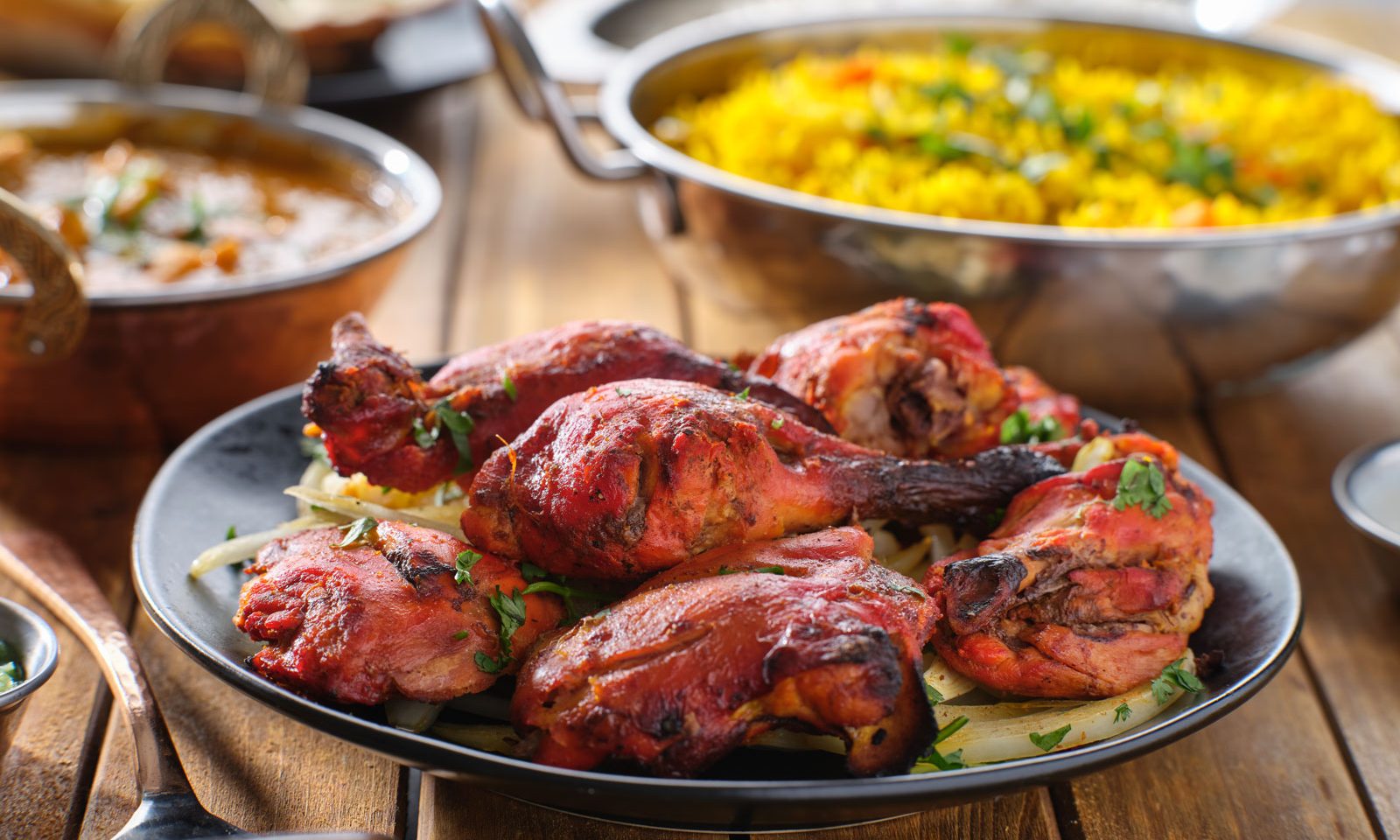
Tandoori Starters
Tandoori cooking stands as one of the most celebrated culinary art forms in Indian gastronomy. Rooted in Central Asian history and perfected in the Punjab region of Northwest India, the tradition revolves around the tandoor—a cylindrical, bell-shaped clay oven fired by charcoal or wood that reaches searing temperatures exceeding 480°C (900°F).
Cooking in a tandoor achieves a unique synergy of radiant heat, convective hot air, and direct infrared cooking. Meat and seafood are suspended vertically on long steel skewers directly over glowing coals. As fat and marinade drip onto the embers, they vaporize, rising as fragrant smoke that infuses the food with a unmistakable earthy, charred finish. This live-fire technique creates crisp, smoky exteriors while locking in moisture within.
At the heart of every great tandoori starter is a two-stage marination process: an initial cure with lemon juice, salt, and ginger-garlic paste to tenderize the protein, followed by a second coating of thick hung curd (Greek yogurt), mustard oil, Kashmiri chili, garam masala, and kasuri methi (dried fenugreek leaves). Together, these ingredients form an aromatic crust that caramelizes against the intense heat of the clay walls.
The Classics: Tandoori Chicken & Chicken Tikka
While sharing a similar flavor profile, Tandoori Chicken and Chicken Tikka differ substantially in cut, texture, and structural presentation.
Tandoori Chicken
Considered the foundational cornerstone of modern tandoori cuisine, Tandoori Chicken features whole, bone-in chicken quarters—traditionally drumsticks and thighs. Deep diagonal incisions (gash marks) are cut into the meat down to the bone. This serves a dual purpose: it allows the yogurt and citrus marinade to penetrate deep into the fibers and ensures even heat distribution so the meat cooks quickly without drying out. Because it is cooked on the bone, Tandoori Chicken yields a exceptionally juicy, rich bite with caramelized, crispy edges along the bone line.
Chicken Tikka
The word tikka translates to "bits" or "morsels." Chicken Tikka consists of bite-sized, boneless cubes of chicken breast or thigh meat threaded onto skewers. Because boneless cuts cook much faster in the ultra-high heat of the tandoor, the marinade undergoes rapid Maillard reaction, forming a charred, intensely flavored outer crust. Modern variations include Chicken Malai Tikka (marinated in heavy cream, cashew paste, and white pepper) and Hariyali Chicken Tikka (coated in a vibrant green paste of fresh mint, coriander, and green chilies).
Coastal Elegance: Prawn Tikka & Salmon Tikka
Adapting tandoori techniques to seafood requires delicate timing and precise temperature control, as fish and shellfish cook in a fraction of the time needed for poultry.
Prawn Tikka
Prawn Tikka showcases large king prawns or jumbo tiger prawns peeled, deveined, and marinated in a light, zest-forward tandoori paste. Because seafood can become rubbery if exposed to heavy acid for too long, the initial citrus marinade is applied briefly right before cooking. Skewered whole, the prawns spend only a few minutes over the coals. The clay oven’s heat crisps the outer shell membrane and cooks the sweet flesh within until succulent, smoky, and tender. A dusting of chaat masala and fresh coriander highlights the natural sweetness of the shellfish.
Salmon Tikka
Salmon Tikka is a modern masterpiece of fusion-leaning Indian cooking. Rich, oily fish like salmon is uniquely suited to the punishing heat of the tandoor because its high fat content prevents it from drying out. Thick, skinless fillets are cut into generous cubes and coated in a spice blend featuring carom seeds (ajwain), dill, turmeric, lemon juice, and yellow chili powder. The carom seeds provide a subtle, thyme-like bitterness that cuts through the rich oils of the fish. In the tandoor, the exterior crust becomes golden and crisp, while the interior remains flakey and buttery.
The Vegetarian Icon: Paneer Tikka
Paneer Tikka proves that vegetarian starters can match any meat dish in richness, texture, and depth of flavor.
Paneer—a fresh, non-melting Indian cottage cheese—is cut into sturdy, thick cubes and alternated on skewers with square petals of crisp bell peppers, red onions, and tomatoes. Because paneer itself is mild and spongy, it acts as a canvas, soaking up the bold spices of the hung-curd marinade.
To achieve the best texture, the marinade relies heavily on:
Mustard Oil (Sarson ka Tel): Heated to its smoking point before being whipped into the yogurt base to add a characteristic pungent, sharp kick.
Roasted Gram Flour (Besan): Lightly toasted chickpea flour mixed into the paste to help the marinade cling firmly to the smooth surface of the cheese cubes without dripping off in the heat.
When skewered alongside vegetables, the paneer soft-chars on the edges while remaining soft and creamy inside, contrasting perfectly with the blistered, sweet crunch of the roasted peppers and onions.
Grand Cholan restaurant is also an excellent venue for private events, including Christmas parties, corporate gatherings, birthday celebrations, anniversaries, and more. For additional information about our mission, menu, and attentive table-side service, please visit www.grandcholan.com.